The start of a cold process with warm results

When Sky decided she’d teach us to make soap, I don’t think she knew what she was walking into. Our ability to nerd out about things keeps us awake at night, literally. And thank goodness for that because what would be here if not us?
Let’s get into it. Did you know before the 1700s, soap making was entirely hot process? Boiling fat with lye for hours. They did it in Ancient Rome and Medieval Europe. Even American colonists did it over open fires, stirring with wooden paddles until their arms gave out[1].
The chemistry was created
That was until 1791, when a French chemist named Nicolas Leblanc patented a process for making soda ash from salt[2] and boom, we had consistent alkali. No more burning seaweed or leaching wood ash and hoping for the best. Leblanc’s soda ash process gave soap makers sodium carbonate with consistent purity. They could then convert it to lye (sodium hydroxide) reliably. Suddenly you could write down a recipe and it would work every time, everywhere.
That was just the start though. When Michel Eugène Chevreul published his research on fatty acids in 1823[3], everything changed. He explained saponification – the process where fats become soap. For the first time, soap makers had real insight into what they were doing.
From that, cold process as we know it emerged from the knowledge Nicolas and Michel gave us. If you understood the chemistry and had access to the knowledge, you didn’t need to cook soap for hours. But it wasn’t like they had the internet, so I wonder what the spread of cold process soap looked like. How it made its way around the world. Can you imagine some guy being like, “hey, you don’t need to cook that,” and everyone in the background like “let him cook.” But really – mix at the right temperature (100-110°F), get your lye ratio correct, and let molecular chemistry do all the work.
Castile’s Way
You know the Spanish soap makers in Castile? They’d been doing a somewhat cold process method since the 1500s[5] (WOW) using pure olive oil. They mixed everything at low temps then aged bars for a full year. It wasn’t efficient, but it made their soap legendary.
With the new knowledge of chemistry behind that process, French soapologists (yes that’s a made-up word) took that concept and refined it. Marseille soap required 72% pure olive oil and specific production methods[6], getting them closer and closer to true cold process. Fun fact: in 1688, Louis XIV issued the Edict of Colbert, which established regulations for Marseille soap production, mandating it be made with olive oil and produced only in the Marseille region. This decree institutionalized the famous soap, limited use of the “Savon de Marseille” name, and helped it gain fame as high-quality, natural soap.
1879: P&G Changes Everything (Not in a Good Way)
In 1879, Procter & Gamble introduced Ivory soap using continuous cold process manufacturing[7]. Suddenly soap could be mass-produced, consistent, and cheap. The 18-month warehouse problem started here. They made so much so fast, it had to sit somewhere. AND now you know why your dead grocery store soap exists. But we’re not done.
Our method is thoughtful
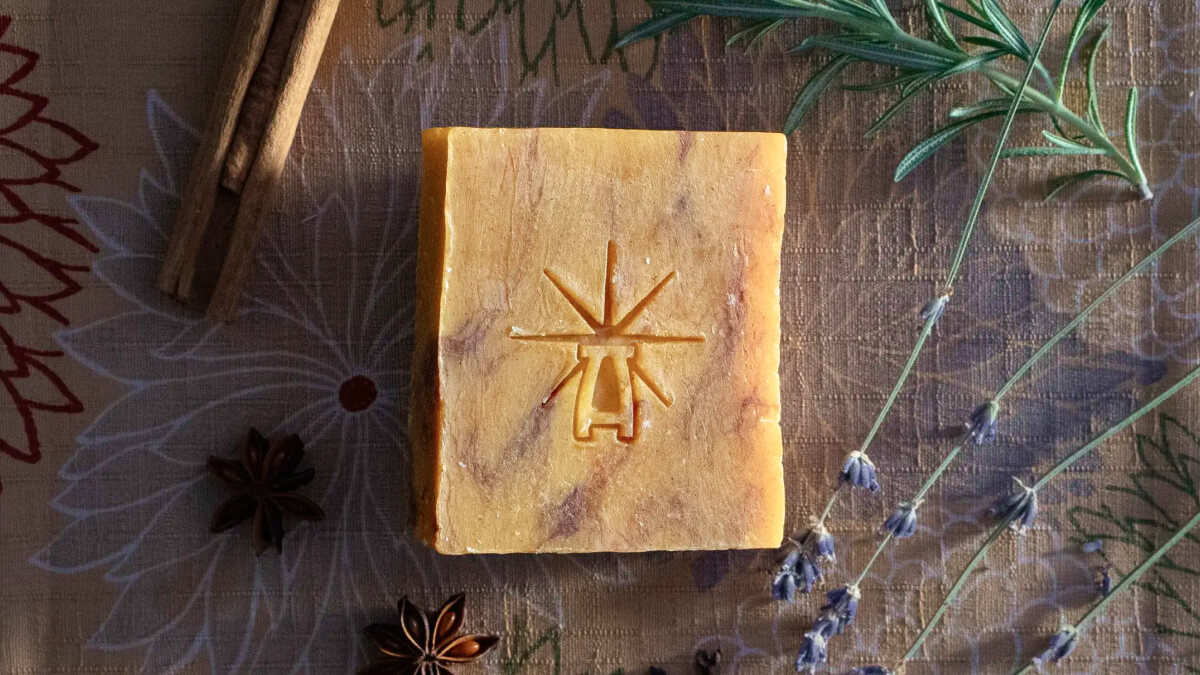
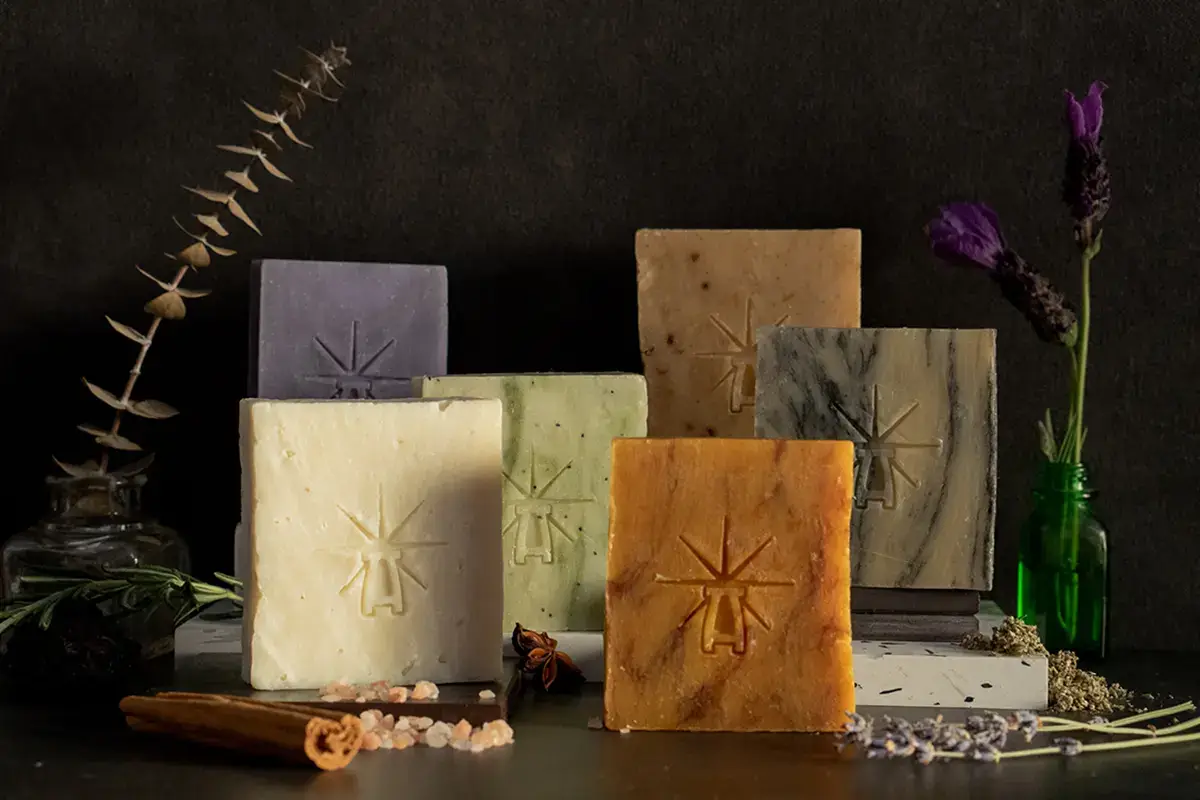
We use the same knowledge on saponification – the 1823 chemistry knowledge combined with pre-1879 batch sizes. Today our bars are made by hand in small batches by a soapmaker with twenty years in. Hot lye and warm oils, poured in a slab and left with a rough top. The glycerin stays in the bar.
Before we go, we’ve been reading a lot about how putting lye in soap makes it toxic and poisonous, but somewhere down the grapevine you were misled. Read our next post about why lye is better for your skin, the world, your shower.
Sources: [1] Cavitch, Susan Miller. “The Soapmaker’s Companion.” Storey Publishing, 1997. [2] Leblanc, Nicolas. “Process for Making Soda Ash.” French Patent, 1791. [3] Chevreul, Michel Eugène. “Recherches chimiques sur les corps gras.” Paris, 1823. [4] Dunn, Kevin. “Scientific Soapmaking.” Clavicula Press, 2010. [5] Zubía, José Carlos. “History of Castile Soap.” Spanish Soap Guild Archives. [6] “Edict of Colbert.” Louis XIV Royal Decree on Marseille Soap, 1688. [7] Procter & Gamble Company Archives. “The Ivory Soap Story.” P&G Heritage Center.